

 16
 2018-07-22 22:13:24
블룸버그에 기고한 이커너미스트 ( 경제학자)의 심층분석리포트라고 하는 게 더 정확할 것같다.
앤 스티븐슨 양 (Anne Stevenson-Yang) 이라는 미정보기술국출신의 유명한 이커너미스트.
중국이 본격적으로 개방한 80년대 후반부터 지금까지 30년넘게 중국(특히 경제)관련한 일을 하는 중국경제전문가란 팩트:)
밑의 기사내용은 사진에서 보다시피 여전히 중국의 빈아파트들은 더욱 더 늘어나고, 중국의 자본수지는 경상수지보다 더 많다는 데 문제가 있다고 지적한다:)
왜 자본수지가 경상수지보다 더 많아서 중국경제의 문제가 될까?! 모르는 사람들을 위해서 간단하게 설명하면, 경상수지는 외국과의 무역거래등을 통한 거래규모를 뜻한다, 자본수지는 광의적인 개념에서 무역거래를 포함하기도 하지만, 좀더 세밀하게 말하면, M&A를 목적으로 하는 주식취득 자금대부등의 직접투자, 채권관련 직접투자, 외국과의 모든 금융거래 즉 대출과 예치금, 무역거래관련한 ( L/C, T/T etc), 상표권과 해외이주비등등을 포함하는 경상수지보다 좀더 광의적인 개념이라고 보면 되는 데, 보통 자본수지와 경상수지를 통틀어 국제수지라고 부른다.
경제학의 기본 수식으로 경상수지+ 자본수지 + ( 준비자산/증감)= Always 0이 되는 걸 의미한다. 쉽게 말해서 경상수지와 자본수지의 +/-합은 언제나 ' 0'이 되어야 한다는 말이다, 즉 해외와의 거래에서 벌어온 흑자만큼 국내외 투자하고 남은 자금은 외환보유고로 총계되는 데, 200억달러의 경상수지흑자가 있다고 가정하면, 이중에서 100억달러를 해외에 투자했다고 가정하면, 나머지 100억달러는 외환보유고로 집계되는 그런 의미라고 보면 간단하게 이해 할수 있을 것이다:)
하지만 중국의 경우 그 간단한 수식인 Account Surplus (경상수지) + Capital Balace (자본수지) + (준비자산/증감)가 중국은 이미 께어진 상황이 몇년간 지속되고 있다는 걸 지적한다.
그예로 Capital Account(자본계정)이 시진핑집권이후 현재까지 6년넘게 지속된 Capital Outflow로 (-) 로 돌아선 점, 상하이증시가 월기준으로 6월에 사상최대폭락을 기록하고, 지금도 여전히 하락장세를 면치 못하는 점, 미Fed의 금리인상과 사상최대로 치솟는 중국기업들의 부도율과 위안화폭락에 따른 중국내 M2(한마디로 돈의 흐름의 심각한 경색으로 치닫는 상황등등:)
하지만 계속쓰는 것처럼 나역시 저 영문기사 작성자 이커너미스트와 같은 생각을 하는 데, 즉 지금현재까지 진행되는 미국의 대중국압박정책들 (특히 무역관련 경제관련한)은 아주 치밀하게 계산된 Plan에서 하나 하나 실행되고 있단 팩트:)
결국 바로 밑의 빨간색으로 표시한 소제목처럼 A tighter dollar will make the bursting of the credit bubble an inevitability. (통화긴축에 따른) 미달러의 (국제자본시장)경색 중국의 부채거품을 터트리는 건 피할수 없는 일이다)
결국 시진핑은 트럼프에게 완전히 굴복을 하든 아님 쫓겨나야 하는 그런 상황으로 치닫는 건 점점 피할 수 없는 상황이 되는 것 같다는 팩트:)
Trump’s Trade War May Spark a Chinese Debt Crisis
A tighter dollar will make the bursting of the credit bubble an inevitability.
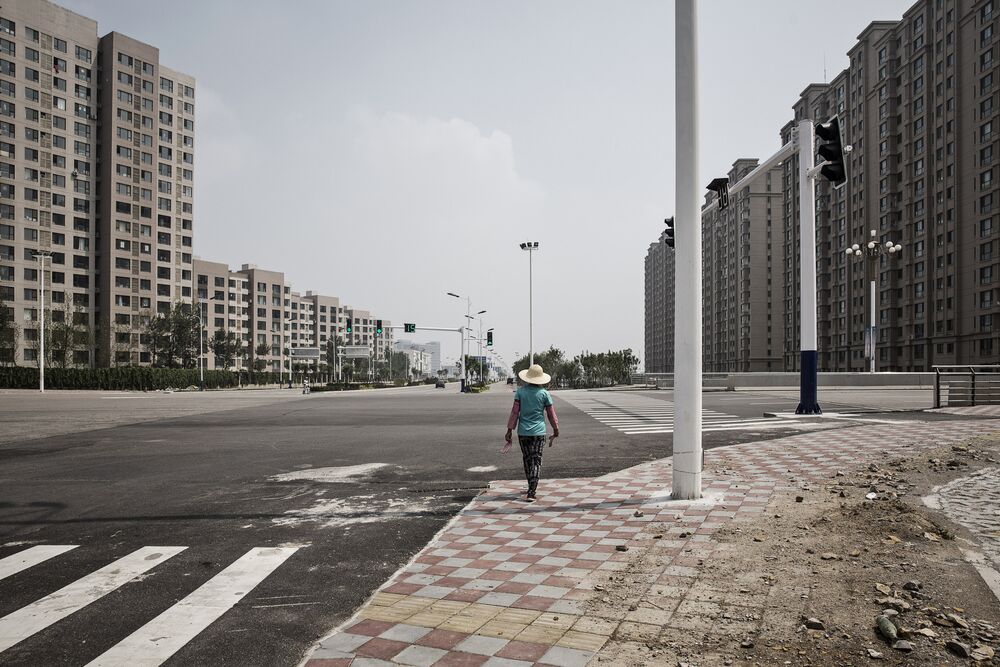
China’s empty apartment towers are a testament to the country’s debt burden.
Photographer: Qilai Shen/Bloomberg
There’s no chance China will cut its trade surplus with the U.S. in response to President Donald Trump’s tariff threats. For starters, Washington has made no specific demand to which Beijing can respond. But its efforts may have an unexpected side effect: a debt crisis in China.
The 25 percent additional tariffs on exports of machinery and electronics looked, at first blush, like a stealth tax on offshoring. The focus on categories like semiconductors and nuclear components, in which U.S.-owned manufacturers in China are strong, recalled Trump’s 2016 promise to tax “any business that leaves our country.”
It seems, though, that offshoring wasn’t the target after all. Now, with the imposition of new tariffs on low-value exports that mostly involve Asian value chains, the simple fact of selling cheap products that the U.S. buys has become the problem.
Either way, the administration appears set on shrinking its current-account deficit (which, at a moderate 2.4 percent of GDP, is far lower than the 6 percent clocked in 2006-7) just as the Federal Reserve raises interest rates.
Distress has already been registered in China. On July 13, the yuan (also known as the renminbi) hit 6.725 to the dollar, the weakest in a year and 5 percent lower than at the end of May.
Such a move is nothing earth-shaking for less controlled currencies. But a stable renminbi is a key plank in the leadership’s promise to its people, and the exchange rate is tightly managed by the central bank.
Chinese investors have been buying official assurances for a year that the renminbi would be a fortress, but now they’re not so sure and are exporting money again: May saw net capital outflows and a decline in the foreign-exchange reserves. The currency is the most visible sign of slippage in the image that China tries to project of an economy so brilliantly managed that the bright sun of GDP expansion is untroubled by even temporary clouds on trade, employment or consumption.
There are many other signs: The Shanghai Composite Index of stocks has declined 7 percent in a month, dropping below the government’s red line of 3,000 for the first time since September 2016. Corporate bonds are about to set a record for the most defaults in a year. Junk bond yields are spiking. The chorus of anxiety about debt is reaching a crescendo, with daily press reports on governments that can’t pay their employees or meet pension obligations. Property prices are tumbling in some cities and frozen in others whose governments have placed a finger in the dyke by halting transactions.
That the massive burden of debt will drag the economy into recession is as obvious as the empty towers that rise on every landscape.
Precise estimates are difficult, since the government’s dedication to the optics of invincibility induces financial institutions to push debt into alternate, opaque channels. But on any metric, the amount of new lending each year grows faster than the economy, and the interest newly owed exceeds the incremental rise in GDP. In other words, the whole economy is a Ponzi scheme.
Many analysts point out that the Chinese government owns everything, including the banks, and can just issue renminbi to infinity to keep the economy solvent. The flaw in that argument is China’s role in the global economy: It’s the world’s biggest exporter and second-biggest importer. The currency acts as the interface between the domestic and international economies, and its value is a matter of supply and demand.
The Ponzi economy has been sustained by cheap dollars coming in through legitimate or illegitimate channels, and the problem now is that structural surpluses are disappearing and there is less “hot” money from the U.S. seeking yield. When dollars enter, the central bank buys them and issues renminbi. If it has to issue more than is justified by the amount of inflows, it creates inflation, and inflation, which has toppled or almost toppled governments from the Ming dynasty to Tiananmen, is the third rail of Chinese politics.
That brings us back to Trump and his trade war. The fundamental idea underlying this salad of a trade agenda is an old one from the right wing of the Republican Party, which believes that the U.S. has paid too dearly for its postwar leadership role under the Bretton Woods regime; putting America first means America marching alone.
The dollar standard, and not trade policies, underpins the global system of commerce. The U.S. runs trade deficits as a consequence of its desire to own the currency that dominates global commerce, not as a casualty of predatory policies by China. The rise of the gold standard in the second half of the 19th century was the key foundation for the expansion of global trade. Its collapse, starting in 1913, drove a trade implosion.
After Bretton Woods, the dollar took over as a global standard, and, when former President Richard Nixon made the greenback no longer redeemable for gold, it was freed to become a pure fiat currency. That meant that the U.S. could project any level of currency around the world to support its national economic growth and lifestyle improvements that exceeded productivity gains. No wonder China wishes the renminbi could do the same.
It is tempting to see the recent yuan depreciation as a strategy to blunt the effect of U.S. tariffs, but really, the capital account is of much greater import to China Inc. than the current account. China’s central bank will almost certainly try to pull back the exchange rate in the near term: Authorities care more about the pile of reserve gold, successful stock-exchange debuts for Xiaomi Corp. and Ant Financial, and lucrative bond issues than about the private and largely foreign-owned companies that dominate exports.
The truth is that China has followed a mercantilist trading policy since Mao Zedong. Most significantly, the investment splurge in the reform years helped political elites rake billions off the forced savings of the Chinese people. That was enabled by incoming capital, and there is no indication that will change.
Until now, China has managed to keep its huge raft of nonperforming debt afloat thanks to capital inflows, as successive waves of quantitative easing pushed dollars into the world. A tighter dollar would seem to make the bursting of China’s credit bubble an inevitability. When that happens, the renminbi will have to depreciate sharply. This will have a deflationary impact on the world. It will also lead to a decline in China’s share of global GDP, dramatically reduce the nation’s demand for commodities, and diminish its role on the international political stage.
Much about Chinese trade practices is genuinely unfair. But the inequity flows as much from U.S. policy favoring big corporations at the expense of workers as it does from Chinese structural subsidies. Both are difficult problems to address — much harder than penalizing exports. No one will benefit when China shrinks and turns inward. Trump should be careful what he wishes for.
